Yogyakarta is known for its culture, but the traditional food deserves as much attention. One stall has become a landmark in its own right: Lupis Mbah Satinem, serving the same sweet rice cake through decades of the city changing around it.
How It Started
Mbah Satinem has been selling lupis since 1963, and people still queue for it. She learned to make it young, using methods passed down through her family that give the cake its particular sweetness. What began as a street stall is now part of Yogyakarta’s culinary heritage.
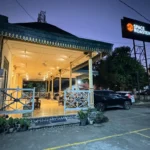
The stall drew international attention when it appeared on the Netflix series Street Food in 2019. You will find it on Jl. Bumijo, near the Tugu monument, within easy reach if you are staying in the city. It sits in front of a row of shophouses, close to the junction with Jalan Diponegoro.
Where and When
- Location: Jl. Bumijo No. 52-40, in front of the shophouses near Tugu Jogja.
- Hours: from 05:30 until it sells out, usually around 07:30.
- What to order: besides lupis there is cenil, gatot, tiwul and klepon, a fuller spread of traditional market snacks.
Mbah Satinem sets up just after dawn prayers and packs away when the lupis is gone, often before half past seven. Locals and visitors alike turn up early to be sure of a portion.
What Makes It Special
One story follows the stall around: President Soeharto was a customer. His aides began buying lupis here regularly after he returned from the hajj, and word spread from there.
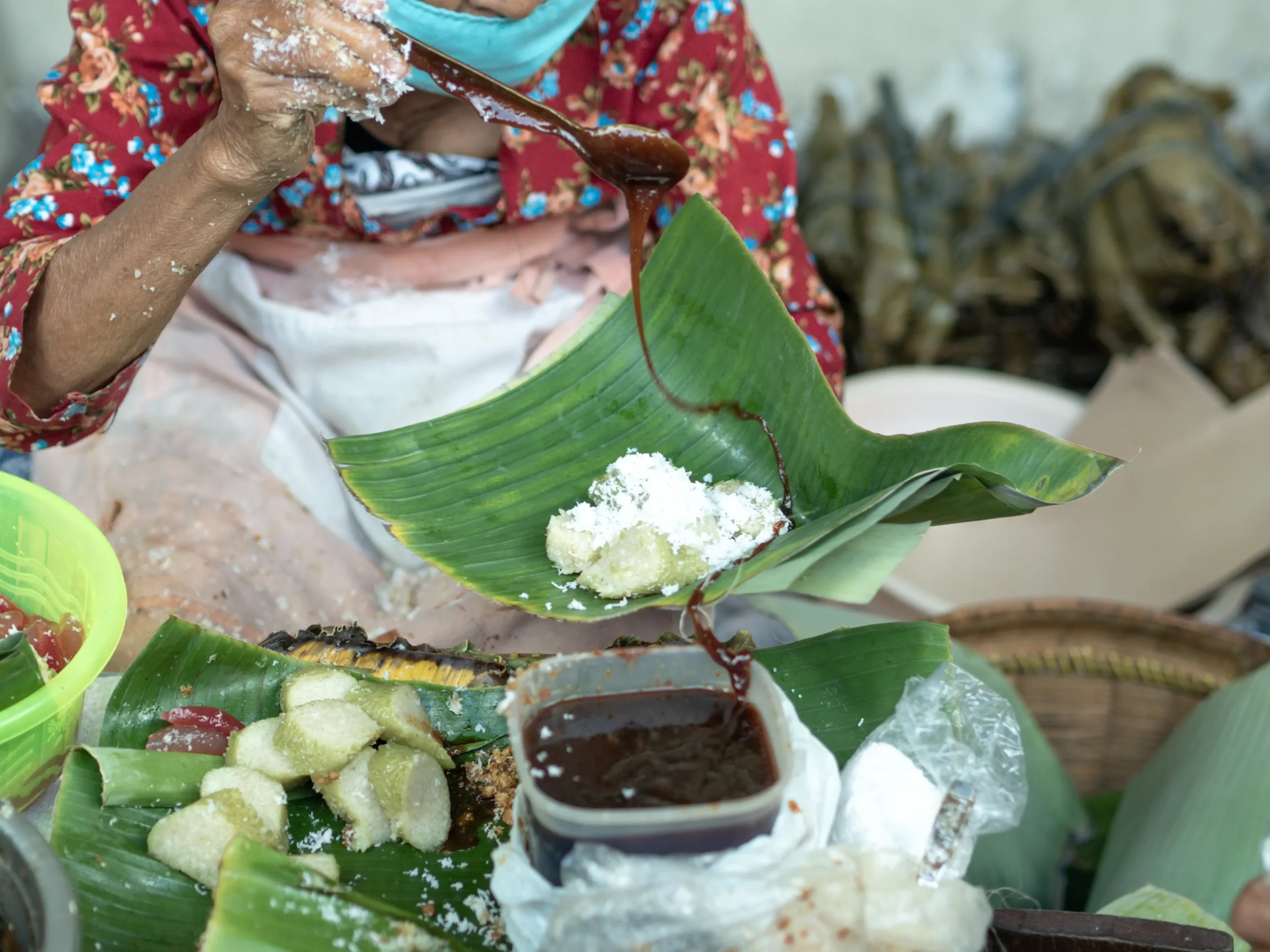
The care behind it matters more. Everything is still made by hand with chosen ingredients. A portion is steamed glutinous rice, fresh grated coconut and liquid palm sugar, sweet and savoury at once. Customers tend to describe the taste in much the same terms.
“I am happy to queue from early morning, because nothing matches the taste of Mbah Satinem’s lupis,” said one customer who preferred not to give a name.
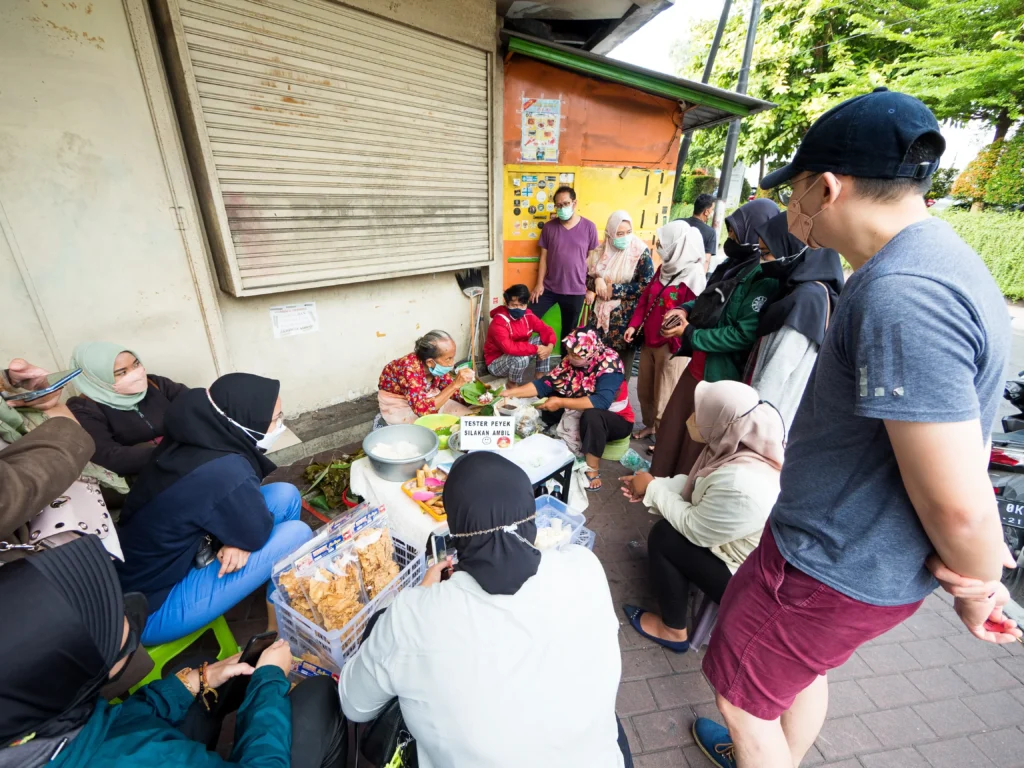
Image by Muh. Juni A from Shutterstock
Why People Keep Coming Back
Lupis Mbah Satinem is not only food. It is a thread of Yogyakarta’s history. People queue because the quality has held for decades. A portion costs around Rp10,000 and usually brings lupis, cenil, gatot, tiwul and glutinous rice with grated coconut and thick palm sugar.
Part of it is eating there and talking with Mbah Satinem herself. That is what brings people back. It is less a meal than a connection to how this city has eaten for a long time.
The Taste
The lupis here is hard to find an equal for. Chewy rice, sweet palm sugar and savoury coconut land in the right proportion. You can also pick up other market snacks from the small table beside her, including klepon, risoles and rempeyek.
Worth the Early Start
If you are in Yogyakarta, make room for this one. The mix of sweet and savoury, and meeting the person who has made it since 1963, puts it well above an ordinary breakfast. Eating here means tasting the food and the city’s history in the same sitting.
One note: come early or you will miss it. Enjoy your eating in Yogyakarta.
Staying in Yogyakarta while you explore? Message Omah Ralin on WhatsApp to check availability and rates.